ADHD Awareness Month: Building a Community of Support
October 2026 | ADHD Awareness Month
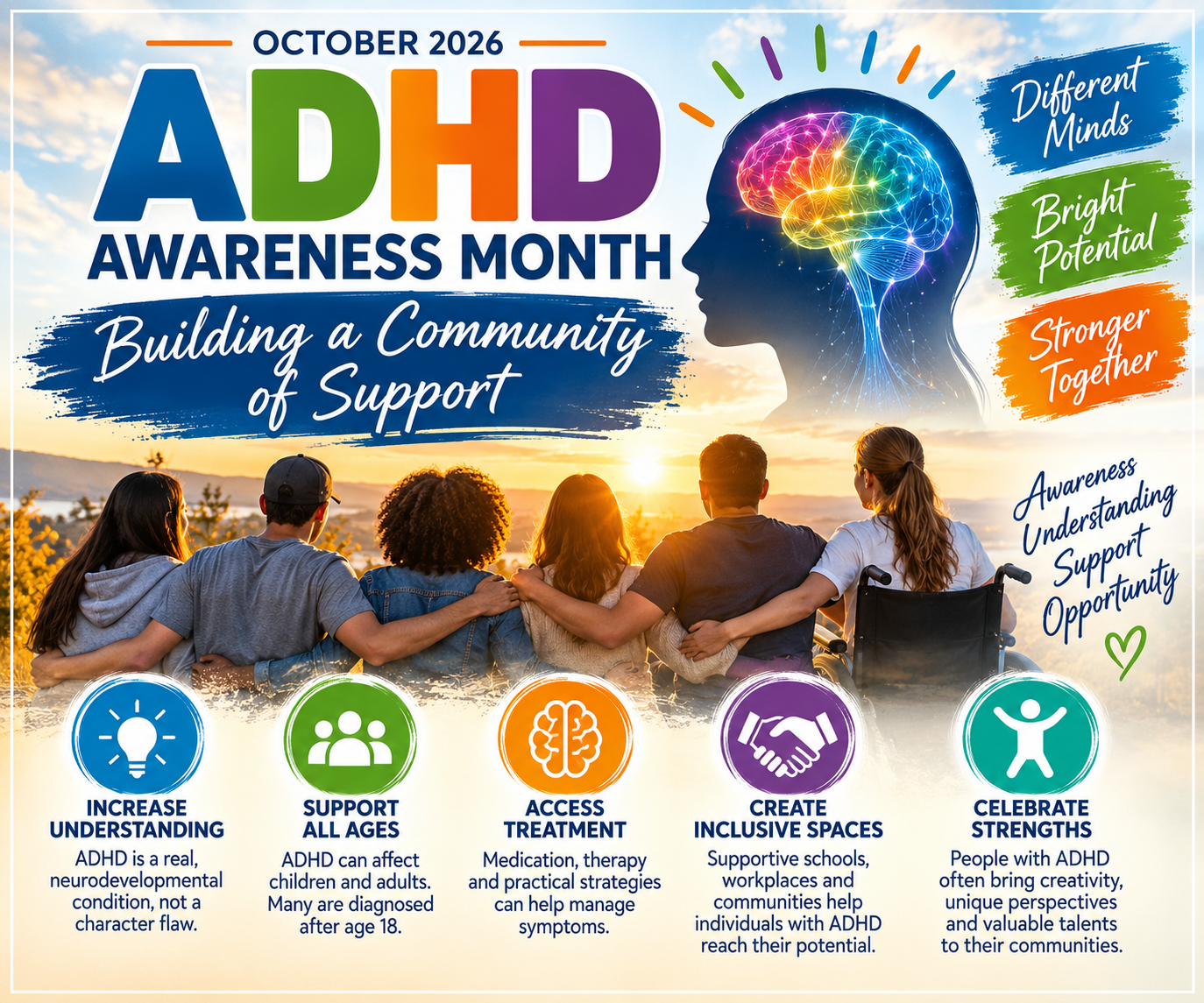
October is ADHD Awareness Month, a time dedicated to increasing understanding, challenging misconceptions and encouraging support for millions of people living with attention-deficit/hyperactivity disorder. The 2026 theme, "A Community of Support," emphasizes the importance of connecting individuals with ADHD to the families, educators, employers, health care professionals and communities that can help them succeed. ADHD is a neurodevelopmental disorder characterized by persistent patterns of inattention, hyperactivity and impulsivity that interfere with everyday functioning. Although commonly associated with childhood, ADHD can continue throughout adulthood, affecting relationships, employment, education and emotional well-being.
According to the Centers for Disease Control and Prevention, approximately 15.5 million American adults, or 6% of the adult population, reported having a current ADHD diagnosis in 2023. More than half received their diagnosis after age 18. For many adults, particularly women, ADHD may have gone unrecognized for decades. Symptoms can be mistaken for anxiety, depression, poor organizational skills or an inability to manage everyday responsibilities. Unlike the visible hyperactivity frequently associated with childhood ADHD, adults may experience difficulty concentrating, managing time, remembering appointments, completing tasks or regulating emotions. Some individuals struggle with restlessness, impulsive decisions or becoming overwhelmed by competing responsibilities. Recognizing these symptoms as part of a neurological condition rather than a character flaw can be an important first step toward receiving appropriate care.
ADHD affects individuals differently. Some primarily have trouble maintaining attention, while others struggle with hyperactivity, impulsivity or a combination of symptoms. Adults with ADHD may find themselves frequently distracted, procrastinating, losing track of time or having difficulty prioritizing responsibilities. These challenges can affect workplace performance, household management and personal relationships. Repeated difficulties may contribute to frustration, low self-esteem and emotional distress. ADHD also frequently occurs alongside other mental health conditions, including anxiety and depression, making accurate diagnosis and individualized treatment especially important. However, ADHD does not determine a person's intelligence, creativity or potential for achievement.
ADHD is diagnosed through a comprehensive clinical evaluation that considers symptoms, developmental history and their impact on daily functioning. Although symptoms must begin during childhood, diagnosis may not occur until adulthood. Treatment options include prescription medications, behavioral therapy, cognitive behavioral therapy and practical strategies for improving organization and time management. Stimulant and nonstimulant medications may help manage symptoms when prescribed and monitored by qualified health care professionals. For some individuals, structured routines, written reminders, organizational tools and professional coaching can provide additional support. Early identification and access to appropriate treatment can improve functioning, confidence and overall quality of life.
The 2026 ADHD Awareness Month theme recognizes that individuals with ADHD benefit from understanding and meaningful support rather than judgment. Employers can contribute by encouraging clear communication, providing written instructions, minimizing unnecessary distractions and considering reasonable workplace accommodations. Educators can help students through structured learning environments, appropriate academic supports and recognition of individual learning differences. Families and friends also play an important role by listening, encouraging open conversations and understanding that difficulties with attention or organization are not necessarily signs of carelessness. For individuals whose ADHD substantially limits major life activities, protections under the Americans with Disabilities Act may provide access to reasonable accommodations. Community organizations, support groups and mental health professionals offer additional opportunities for education, encouragement and connection.
ADHD Awareness Month is more than an opportunity to recognize a diagnosis. It is a reminder that compassion, education and access to resources can make a meaningful difference. Reducing stigma begins with replacing outdated assumptions with reliable information and recognizing that ADHD can affect people of all ages. For individuals who have struggled for years without understanding why certain tasks seem unusually difficult, receiving a diagnosis can provide clarity and open the door to effective support. The message behind this year's theme is that no one should have to navigate ADHD alone. By building communities that value understanding, inclusion and appropriate treatment, society can help individuals with ADHD reach their potential and lead fulfilling, productive lives.
References
ADHD Awareness Month Coalition. (2026). ADHD Awareness Month: A Community of Support.
https://www.adhdawarenessmonth.org;
Children and Adults with Attention-Deficit/Hyperactivity Disorder (CHADD). (2026). ADHD Awareness 2026: A Community of Support.
https://chadd.org/adhd-awareness-2026-a-community-of-support/;
Centers for Disease Control and Prevention. (2024). Attention-Deficit/Hyperactivity Disorder Diagnosis, Treatment, and Telehealth Use in Adults — United States, October-November 2023. Morbidity and Mortality Weekly Report.
https://www.cdc.gov/mmwr/volumes/73/wr/mm7340a1.htm;
National Institute of Mental Health. ADHD in Adults: Four Things to Know.
https://www.nimh.nih.gov/health/publications/adhd-what-you-need-to-know;
Centers for Disease Control and Prevention. (2026). ADHD Partner Toolkit.
https://www.cdc.gov/adhd/php/partner-toolkit/index.html





New Paragraph