November is National Family Literacy Month, an annual observance

November 20, 2026

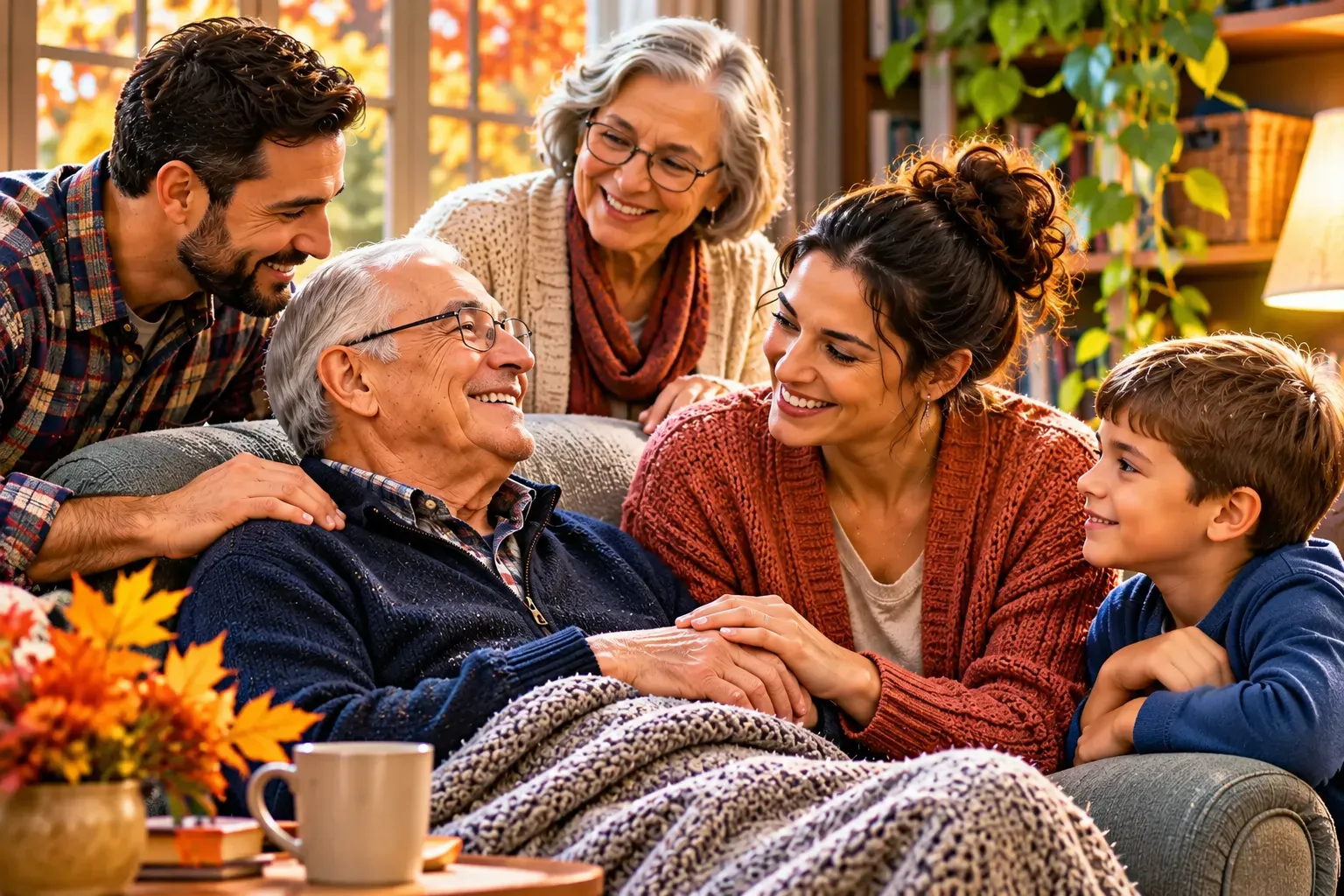
November is National Family Literacy Month, an annual observance highlighting the importance of reading, education and learning together as a family. The monthlong celebration encourages parents, grandparents, caregivers and children to participate in activities that strengthen literacy skills and foster lifelong learning. Schools, libraries and community organizations across the country recognize the observance through reading programs, educational workshops and family-centered activities.


National Family Literacy Month grew from National Family Literacy Day, established in 1994 through efforts by the National Center for Families Learning and Congress. Originally recognized Nov. 1, the observance expanded into a monthlong celebration emphasizing the connection between family involvement and educational achievement. The National Center for Families Learning, founded in 1989, has long promoted educational programs that serve parents and children together. Its approach recognizes that improving adult education can also strengthen children's academic development and create opportunities for future generations.


Literacy development begins long before children enter a classroom. Reading aloud, telling stories, discussing everyday experiences and encouraging curiosity can help children develop vocabulary, comprehension and communication skills. Parents and caregivers play an important role in establishing these early learning habits. Simple activities such as reading bedtime stories, visiting public libraries, preparing recipes together or discussing books can provide valuable educational opportunities. Grandparents and other family members also contribute by sharing personal stories, family traditions and experiences that connect generations. These interactions help children develop language skills while strengthening family relationships. 


Despite advances in educational resources and technology, literacy continues to present challenges for many American families. Adults with limited literacy skills may encounter difficulties navigating employment opportunities, understanding financial documents, accessing health information and participating fully in their communities. Children who struggle with reading may face additional academic challenges as they progress through school. Family literacy initiatives seek to address these concerns by supporting both adult learners and children. Programs often combine adult education, early childhood instruction, parenting education and opportunities for parents and children to learn together. This multigenerational approach recognizes that educational progress can benefit entire households rather than individual students alone.


National Family Literacy Month also emphasizes that education does not end with childhood. Adults who pursue additional learning opportunities demonstrate the value of education to younger family members. Whether completing a degree, learning a new language, improving reading skills or exploring new technology, parents and grandparents can serve as examples of lifelong learning. Public libraries offer accessible opportunities for families to participate in reading programs, borrow educational materials and explore digital resources. Community organizations and schools may also provide literacy workshops, tutoring services and family engagement activities.


Sources Families can participate in National Family Literacy Month through activities that require little preparation or expense. Setting aside time to read together, exchanging books, sharing family stories or visiting a local library can encourage meaningful interaction. Older children may read to younger siblings, while grandparents can introduce books they enjoyed during childhood. Families can also explore their histories by recording oral traditions, writing personal memories or creating collections of family stories. These activities encourage reading and writing while preserving experiences and strengthening connections between generations. National Family Literacy Month serves as a reminder that education is a shared responsibility and that learning opportunities exist in everyday experiences. By encouraging reading, conversation and curiosity, families can help build a foundation for educational success that extends well beyond November.


National Center for Families Learning — National Family Literacy Month, 2026.
https://familieslearning.org/blog/celebrate-national-family-literacy-month-with-ncfl-this-november/
; National Center for Families Learning — History of National Family Literacy Day and Month; https://familieslearning.org/blog/november-is-national-family-literacy-month/; U.S. Government Publishing Office — H.J. Res. 413, designating Nov. 1, 1994, as National Family Literacy Day; https://www.govinfo.gov/app/details/BILLS-103hjres413cph

November 20, 2026
National Gratitude Month was established in 2015 after author and motivational speaker Stacey Grewal submitted the observance to National Day Calendar. The designation was intended to encourage individuals to incorporate gratitude into their daily routines and recognize its influence on relationships, emotional health and overall happiness. Since its establishment, the observance has inspired gratitude journals, community activities and personal challenges focused on expressing appreciation. Scientific research suggests that practicing gratitude can contribute to improved psychological well-being. A 2023 systematic review and meta-analysis published in the journal Einstein (São Paulo) examined the effects of gratitude interventions and found evidence of benefits for mental health. A larger analysis published in July 2025 in the Proceedings of the National Academy of Sciences reviewed 145 studies involving 24,804 participants across 28 countries. Researchers found that gratitude exercises produced small but measurable improvements in well-being. The effectiveness varied across cultures and depended partly on how the exercises were conducted. These findings suggest that gratitude can be a useful practice for supporting emotional health, although it is not a substitute for professional treatment when needed. Making gratitude part of everyday life. Practicing gratitude does not require elaborate activities or significant financial resources. Keeping a journal, expressing appreciation to a friend or family member, or reflecting on positive experiences can help individuals become more aware of meaningful moments. The Centers for Disease Control and Prevention recommends several ways to develop gratitude, including writing letters of appreciation, keeping a gratitude journal and recognizing personal accomplishments. Even small expressions of appreciation can strengthen relationships and encourage positive interactions. Gratitude does not mean ignoring hardship, dismissing painful experiences or pretending that difficult circumstances do not exist. Instead, it allows people to acknowledge challenges while also recognizing sources of support, comfort and personal strength. For individuals experiencing illness, financial difficulties, grief or major life changes, gratitude may involve appreciating a supportive friend, a moment of independence or a small personal accomplishment. The practice can coexist with sadness, frustration and uncertainty. National Gratitude Month provides an opportunity to begin habits that can continue throughout the year. Whether through journaling, volunteering, acts of kindness or simple expressions of thanks, the observance encourages individuals to recognize the people and experiences that bring meaning to their lives. While Thanksgiving offers a designated day to express appreciation, National Gratitude Month reminds Americans that thankfulness need not be limited to a holiday. Cultivating gratitude can begin with a simple question: What is one thing worth appreciating today? National Day Calendar — National Gratitude Month, observance history and background. https://nationaldaycalendar.com/celebrations/national-gratitude-month-november ; Stacey Grewal — 2015 announcement establishing National Gratitude Month. https://www.prnewswire.com/news-releases/november-officially-declared-national-gratitude-month-for-usa-and-canada-300169435.html ; Centers for Disease Control and Prevention — Gratitude Works, information about gratitude practices and emotional well-being. https://www.cdc.gov/howrightnow/gratitude/index.html ; PubMed / Einstein (São Paulo), 2023 — The effects of gratitude interventions: A systematic review and meta-analysis. https://pubmed.ncbi.nlm.nih.gov/37585888/ ; Proceedings of the National Academy of Sciences, 2025 — A meta-analysis of the effectiveness of gratitude interventions on well-being across cultures. https://doi.org/10.1073/pnas.2425193122
November 20, 2026
November is National Family Caregivers Month, an annual observance recognizing the millions of Americans who provide unpaid assistance to relatives, friends and loved ones living with illness, disabilities or age-related challenges. The monthlong observance highlights the essential role family caregivers play in the nation's health care system while drawing attention to the physical, emotional and financial responsibilities that often accompany caregiving. The 2026 theme, “Care Connects Us,” emphasizes the relationships and support networks that help caregivers navigate their responsibilities. According to the 2025 Caregiving in the U.S. report from AARP and the National Alliance for Caregiving, approximately 63 million Americans, nearly one in four adults, provide ongoing care to someone with a serious illness, disability or age-related health condition. That represents an increase of approximately 20 million caregivers since 2015. Family caregivers assist with a wide range of responsibilities, including transportation, meal preparation, household tasks, medication management and personal care. Many also coordinate medical appointments, communicate with health care professionals and manage financial or insurance-related matters. Their contributions allow millions of older adults and people with disabilities to remain in their homes and communities. Although caring for a loved one can be personally meaningful, the responsibilities can also create substantial challenges. Family caregivers frequently balance their duties with employment, parenting, household responsibilities and their own health needs. Some reduce their working hours or leave the workforce to provide care, potentially affecting their income, retirement savings and long-term financial security. Others experience stress, exhaustion and social isolation as caregiving demands increase. The 2025 AARP report identifies financial strain, health concerns and limited access to support as significant issues facing caregivers nationwide. These challenges are particularly important as the population ages and the demand for long-term care continues to grow. National Family Caregivers Month has been recognized since 1997 through awareness campaigns and presidential proclamations. Led by the Caregiver Action Network, the annual observance encourages communities to recognize caregivers' contributions and connect them with available resources. The 2026 campaign focuses on the importance of connection, reminding caregivers that information, community relationships and practical assistance can help reduce the burdens of providing care. Recognition can take many forms, including offering to prepare a meal, providing transportation, helping with errands or giving a caregiver an opportunity to rest. Even small acts of support can make a meaningful difference. Organizations such as the Caregiver Action Network, AARP and the Administration for Community Living offer educational materials, caregiver support information and guidance on accessing assistance. The National Family Caregiver Support Program helps eligible family caregivers obtain services such as counseling, training, respite care and assistance locating community resources. Respite services can provide temporary relief, allowing caregivers time to address personal needs, attend appointments or rest. Experts and advocacy organizations also emphasize the importance of maintaining social connections and seeking assistance before caregiving responsibilities become overwhelming. Family caregiving often involves several generations. Adult children may provide assistance to aging parents while continuing to raise their own families. Grandparents may care for grandchildren, and spouses may assume increasing responsibilities when a partner develops a chronic illness. Friends, neighbors and extended family members also provide essential assistance. These relationships illustrate the central message of the 2026 campaign: Caregiving connects individuals, families and communities. National Family Caregivers Month offers an opportunity not only to express appreciation but also to recognize the need for stronger support systems. As millions of Americans continue to provide essential care, the observance serves as a reminder that those who care for others also deserve compassion, resources and opportunities to maintain their own well-being. Caregiver Action Network — National Family Caregivers Month, 2026 campaign and history. https://www.caregiveraction.org/nfc-month/ ; AARP and National Alliance for Caregiving — Caregiving in the U.S. 2025. https://www.caregiving.org/research/caregiving-in-the-us/ ; AARP — New Report Reveals Crisis Point for America's 63 Million Family Caregivers, July 24, 2025; https://www.aarp.org/press/releases/2025-07-24-new-report-reveals-crisis-point-for-americas-63-million-family-caregivers.html ; Administration for Community Living — National Family Caregivers Month and federal caregiver support initiatives; https://acl.gov/news-and-events/events-and-observances/nfcm ; Caregiver Action Network — Care Connects Us, 2026 campaign resources. https://www.caregiveraction.org/nfc2026/
November 20, 2026
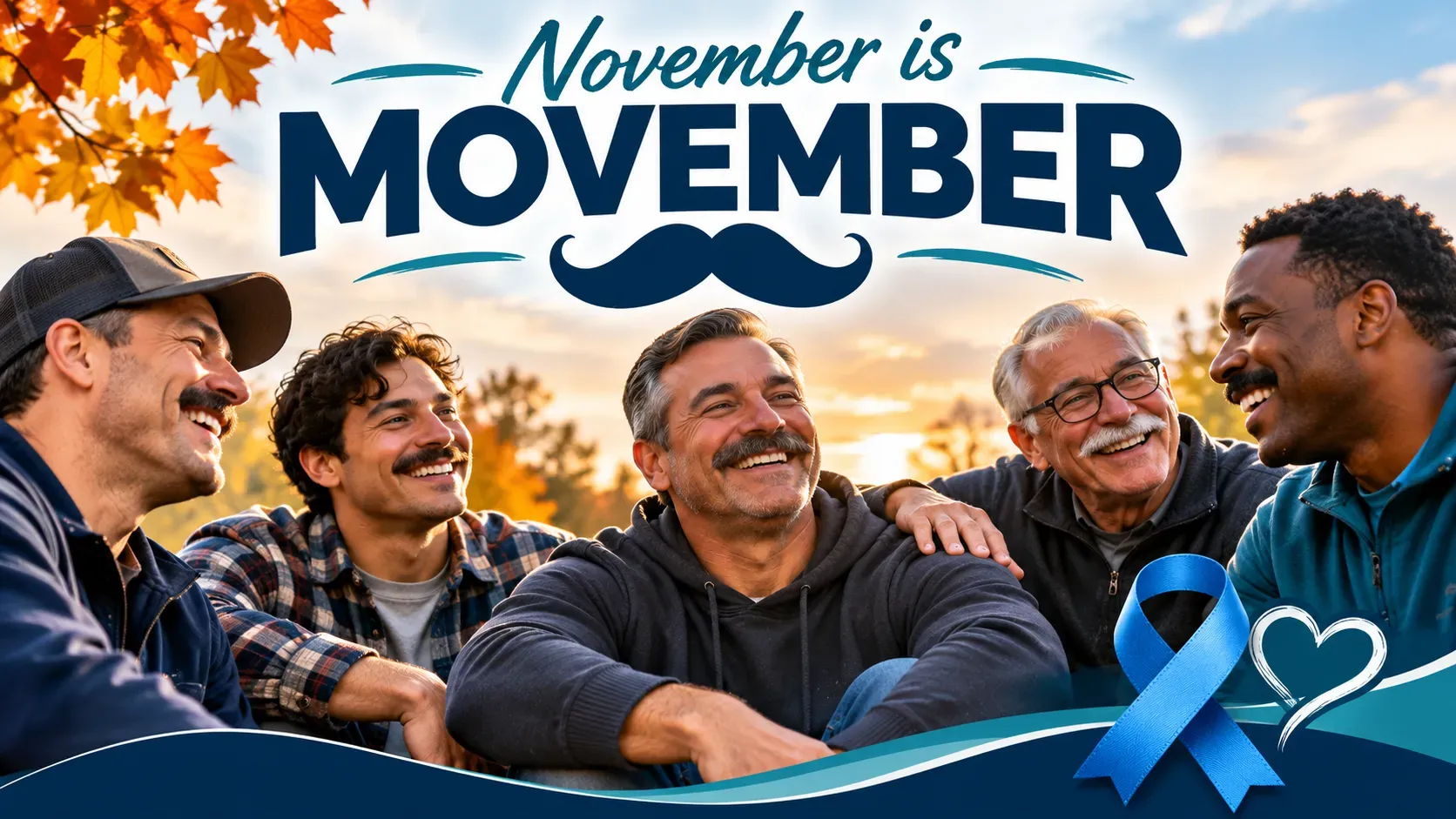
Every November, mustaches become more than a fashion statement as millions of people around the world participate in Movember, a global campaign dedicated to improving men's physical and mental health. The annual observance encourages men to take a proactive approach to their well-being, particularly in three critical areas: prostate cancer, testicular cancer, and mental health and suicide prevention. Through fundraising, educational programs and community activities, Movember seeks to challenge the stigma surrounding men's health and encourage conversations that could save lives. Movember began in Melbourne, Australia, in 2003 when a group of friends decided to grow mustaches during November to raise awareness about men's health. What started as a lighthearted challenge quickly developed into an international charitable movement. More than two decades later, the Movember Foundation has funded over 1,250 men's health projects worldwide, supporting medical research, preventive health initiatives and mental health services. The organization reports that its fundraising efforts have generated more than 1.8 billion Australian dollars for men's health initiatives. Cancer awareness remains a central focus of Movember. Prostate cancer is one of the most commonly diagnosed cancers among men, making informed discussions about individual risk factors, screening options and treatment especially important. Age, family history and inherited genetic factors can influence a man's risk of developing the disease. Health professionals encourage men to discuss the potential benefits and limitations of prostate-specific antigen testing with their medical providers rather than assuming that every man requires identical screening. Testicular cancer, although less common overall, disproportionately affects younger men. Recognizing unusual changes, including lumps, swelling or discomfort, and seeking timely medical evaluation can help identify potential problems. Movember supports research and educational resources designed to improve cancer treatment, survivorship and quality of life. Mental health and suicide prevention are equally important components of the Movember campaign. Men may face cultural expectations that discourage them from expressing vulnerability, discussing emotional difficulties or seeking professional assistance. These expectations can contribute to isolation and delay access to mental health services. According to the Movember Foundation, approximately 60 men die by suicide globally every hour. The organization encourages men to maintain meaningful social connections, recognize changes in their emotional well-being and reach out when they need support. Friends, family members and colleagues can also play an important role by initiating conversations, listening without judgment and helping connect individuals with appropriate resources. Participation in Movember extends beyond growing a mustache. Individuals can support the campaign through fundraising events, community gatherings, donations and physical activity challenges. One of its signature initiatives, the Move Challenge, encourages participants to walk or run 60 miles during November in recognition of the approximately 60 men lost to suicide worldwide every hour. The challenge promotes movement while creating opportunities for discussion and community involvement. Participants may complete the distance individually or as part of a team. Others organize workplace activities, social gatherings or personal fundraising campaigns to support the cause. Movember emphasizes the importance of addressing health concerns before they become more serious. Routine medical appointments, awareness of family medical history, appropriate cancer screening and attention to mental health can help men make informed decisions about their care. Healthy habits such as regular physical activity, balanced nutrition, sufficient sleep and limiting tobacco and excessive alcohol use can also contribute to overall well-being. Equally important is recognizing that seeking medical or psychological assistance demonstrates responsibility rather than weakness. Although Movember takes place each November, its message extends throughout the year. The campaign encourages families, workplaces and communities to create environments in which men feel comfortable discussing physical symptoms, emotional difficulties and personal concerns.  Women also play an important role as supporters, advocates and participants in fundraising efforts. By promoting education, encouraging preventive care and strengthening social connections, Movember seeks to reduce preventable deaths and improve quality of life. The movement's central message is straightforward: Men's health deserves attention, conversations matter, and taking action today can help create healthier futures. Movember Foundation — About Us: Changing the Face of Men's Health. https://movember.com/about-us ; Movember Foundation — Our Cause: Mental Health, Prostate Cancer and Testicular Cancer; https://us.movember.com/p/mcp/about/cause ; Movember Foundation — Move for Mental Health, the 60-mile challenge; https://us.movember.com/support-us/move ; Movember Foundation — Men's Health Programs and Research Initiatives. https://movember.com/our-programs ; Movember Foundation — Official Movember Campaign and Ways to Participate; https://movember.com/
October 17, 2026
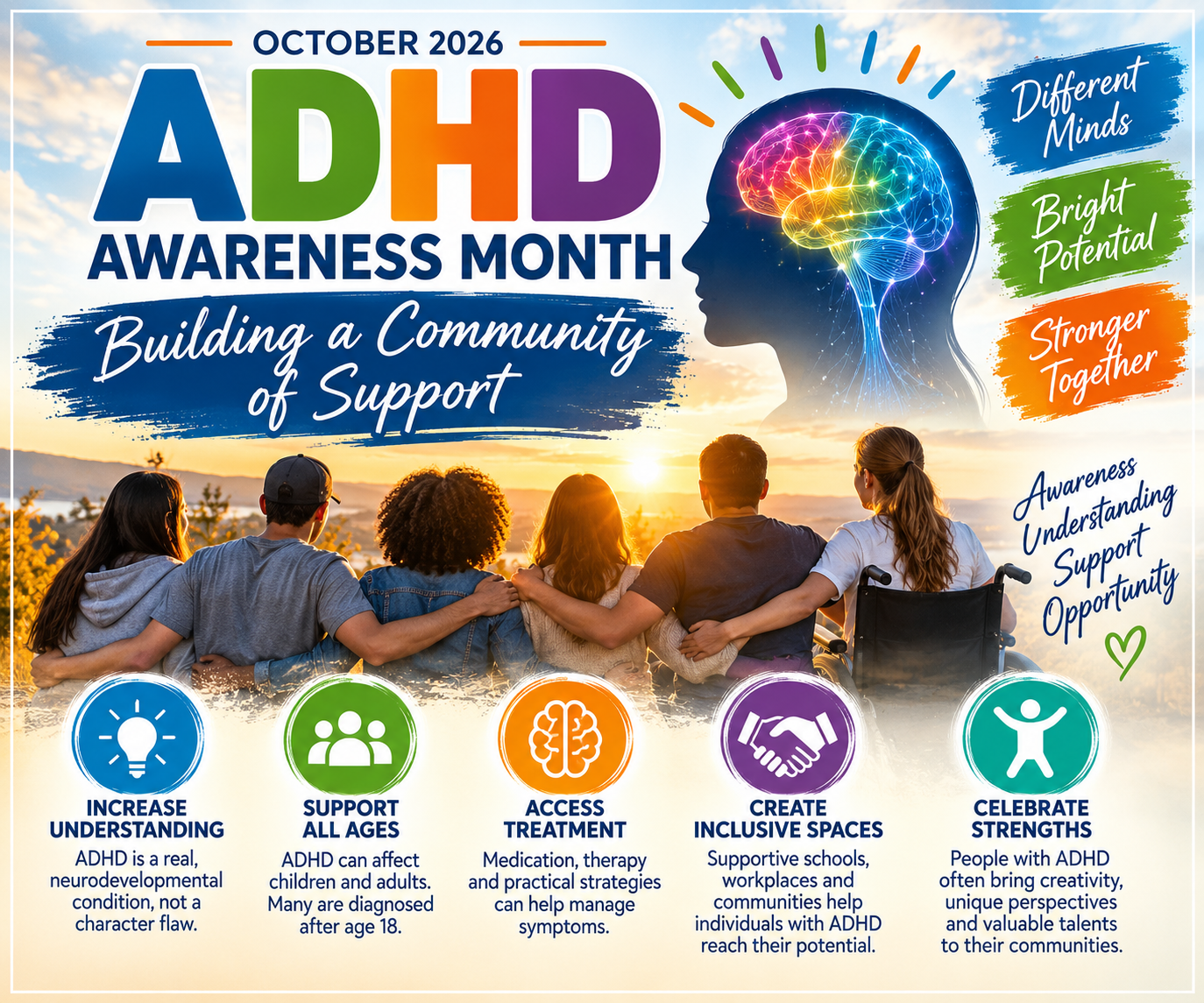
October 2026 | ADHD Awareness Month
October 17, 2026
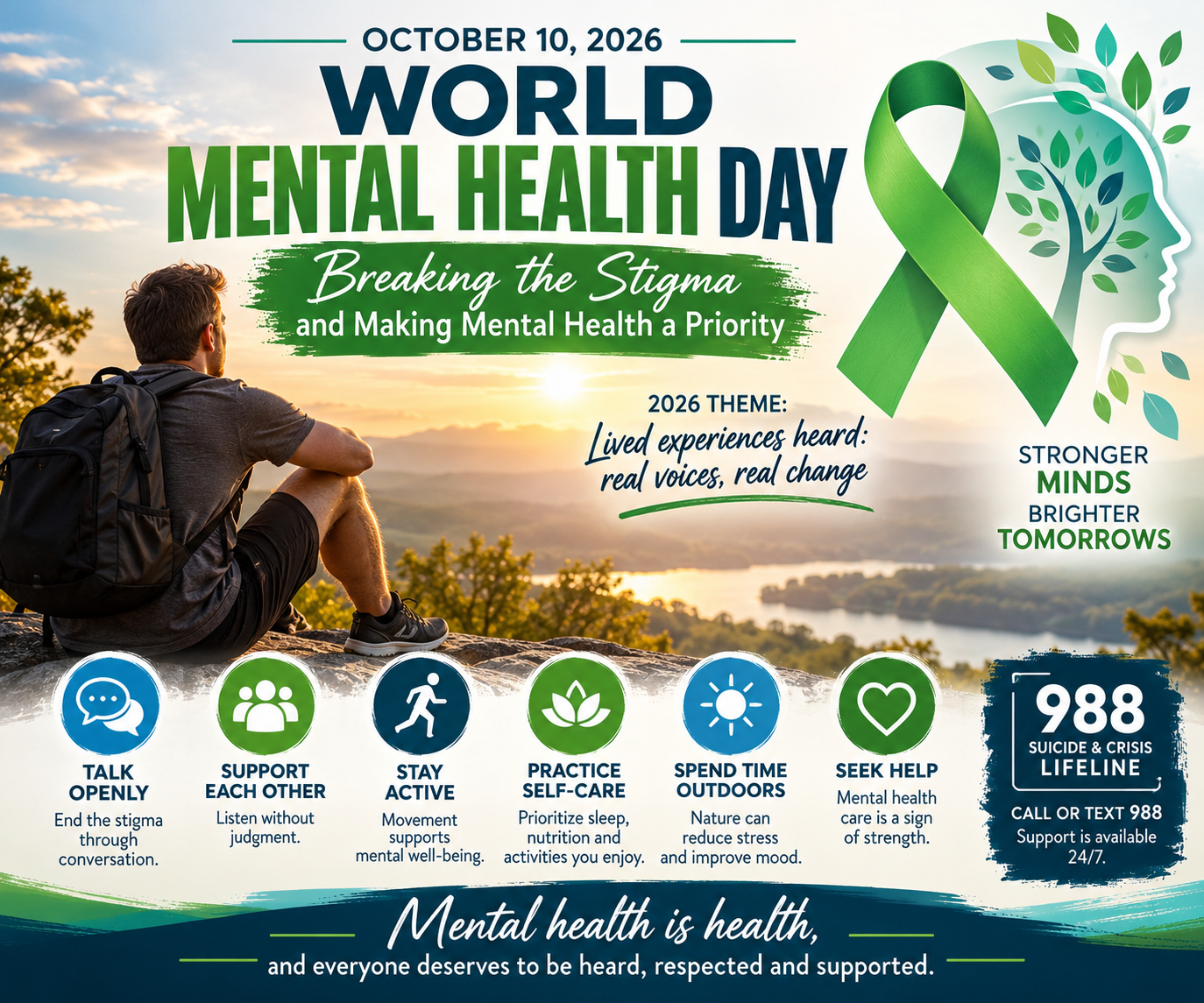
Oct. 10, 2026 — World Mental Health Day
October 17, 2026
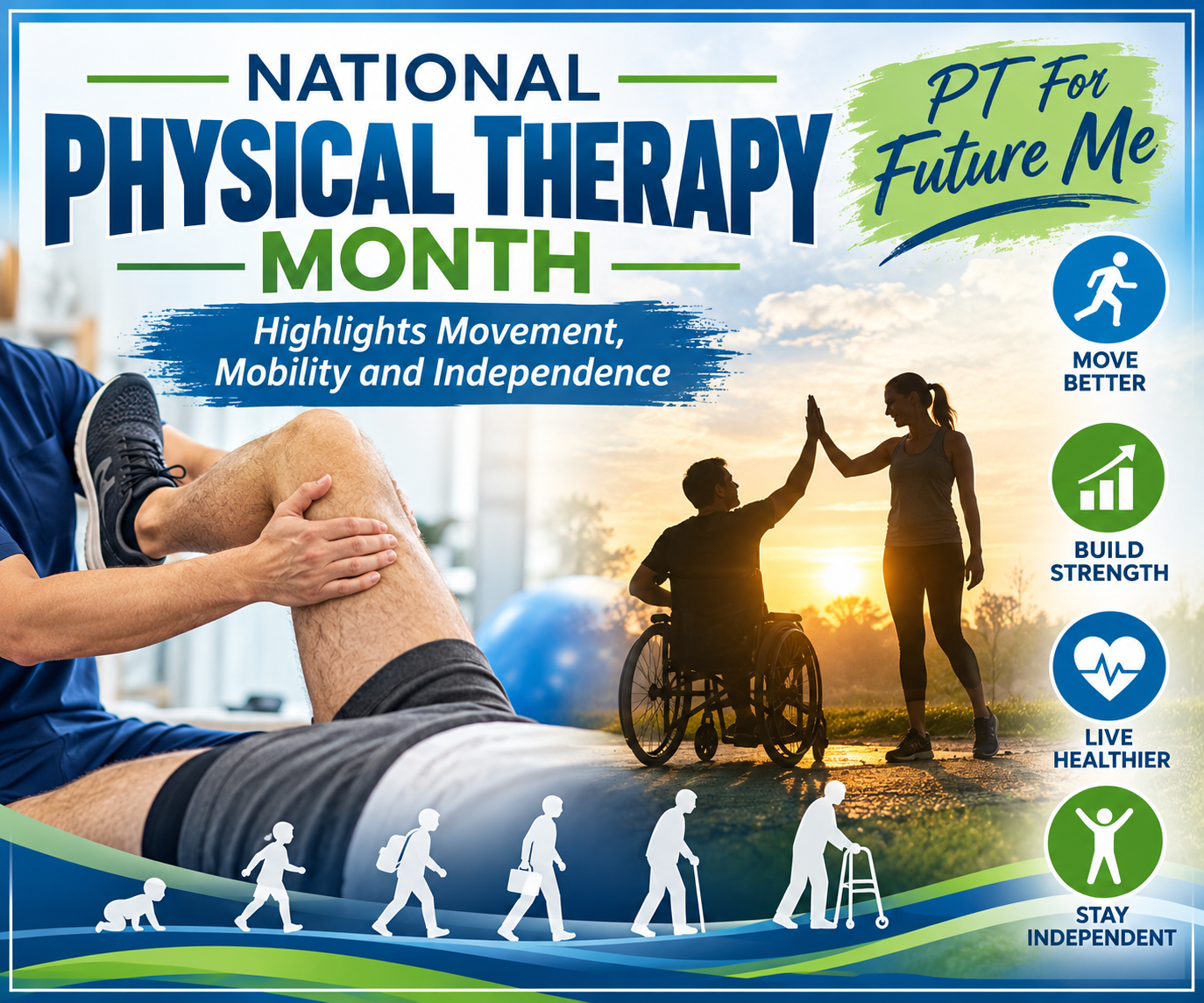
Every October, National Physical Therapy Month recognizes the important role physical therapists and physical therapist assistants play in helping people move better, recover from injuries and maintain independence throughout their lives. The American Physical Therapy Association, or APTA, uses the annual observance to increase public awareness of physical therapy and its benefits. In 2026, APTA is continuing its “PT For Future Me” campaign, which encourages people to view physical therapy not only as something needed after an injury or surgery, but also as a resource for prevention, wellness and long-term mobility. Physical therapists are movement specialists who work with people of all ages and abilities. Treatment may include therapeutic exercise, balance and coordination training, strengthening, flexibility work, pain management and education about safer ways to move during everyday activities. For someone recovering from surgery or an injury, physical therapy can be an important part of regaining strength and function. But physical therapy can also help people who are living with chronic conditions, neurological disorders, balance problems or age-related changes in mobility. The 2026 “PT For Future Me” campaign emphasizes building strength, mobility and resilience throughout the lifespan. The goal is to help people protect their ability to participate in work, recreation and everyday life as they grow older. Physical therapy also can play an important role in fall prevention. A physical therapist can evaluate strength, balance, walking ability and other factors that may increase a person’s risk of falling. Therapists can then develop individualized programs designed to improve mobility and reduce that risk. For older adults, maintaining strength and balance can make the difference between being able to perform daily activities independently and requiring additional assistance. Physical therapists may work on tasks such as standing, walking, transferring from a chair, climbing stairs or safely using a walker or other mobility device. Physical therapy is not limited to one type of patient. Therapists work in hospitals, rehabilitation facilities, outpatient clinics, schools, nursing facilities, sports settings and patients’ homes. Specialty areas include orthopedics, neurology, pediatrics, geriatrics, cardiovascular and pulmonary rehabilitation, sports rehabilitation and women’s health. National Physical Therapy Month dates back to 1992, when the first monthlong observance was held after earlier celebrations of Physical Therapy Week. Its purpose has remained largely the same: educating communities about the role physical therapy can play in helping people remain active, healthy and independent. October also includes Global Physical Therapy Day of Service on Oct. 10. The event encourages physical therapists, physical therapist assistants, students and supporters around the world to participate in volunteer projects that benefit their communities. Perhaps one of the most important messages of National Physical Therapy Month is that physical therapy does not have to begin only after something goes wrong. Improving strength, balance and movement before a serious problem develops may help people remain active and better prepared for the physical challenges that come with aging, illness or injury. Whether the goal is returning to work after surgery, learning to walk again, reducing pain, preventing falls or simply maintaining the ability to enjoy everyday activities, physical therapy can provide tools for moving toward greater function and independence. References: American Physical Therapy Association. “National Physical Therapy Month: October.” APTA, 2026. https://www.apta.org/national-physical-therapy-month ; American Physical Therapy Association. “National Physical Therapy Month: Celebrate, Engage, and Raise Awareness.” Sept. 9, 2026. https://www.apta.org/article/2026/09/09/national-physical-therapy-month-celebrate-engage-and-raise-awareness ; American Physical Therapy Association. “APTA Launches Campaign Tools for National Physical Therapy Month.” Sept. 30, 2026. https://www.apta.org/article/2026/09/30/apta-launches-campaign-tools-for-national-physical-therapy-month ;ChoosePT. “National Physical Therapy Month.” American Physical Therapy Association, 2026. https://www.choosept.com/nptm ;American Physical Therapy Association. “Global Physical Therapy Day of Service.” 2026. https://www.apta.org/national-physical-therapy-month/physical-therapy-day-of-service
October 17, 2026
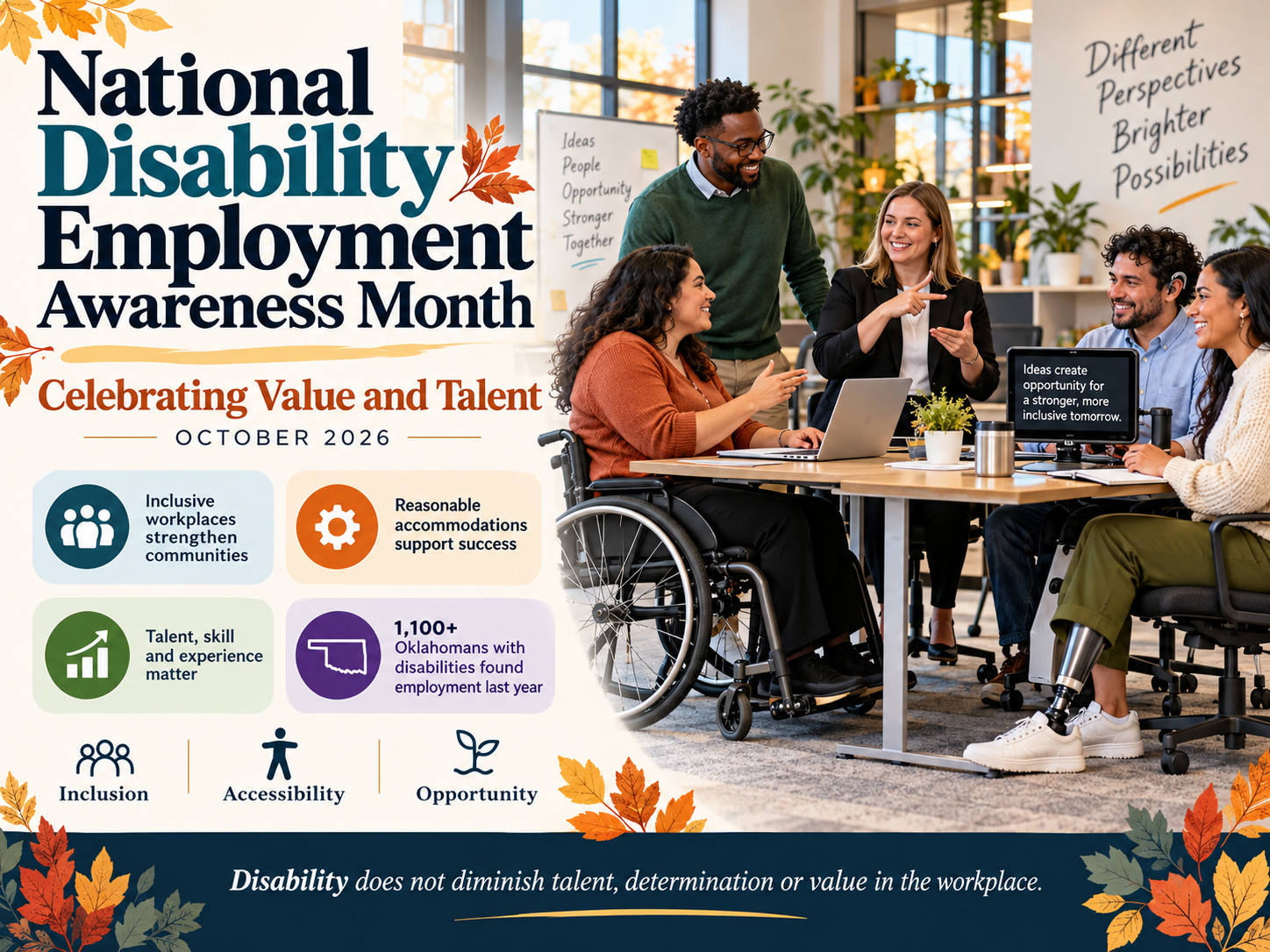
October 2026 | National Disability Employment Awareness Month
September 27, 2026
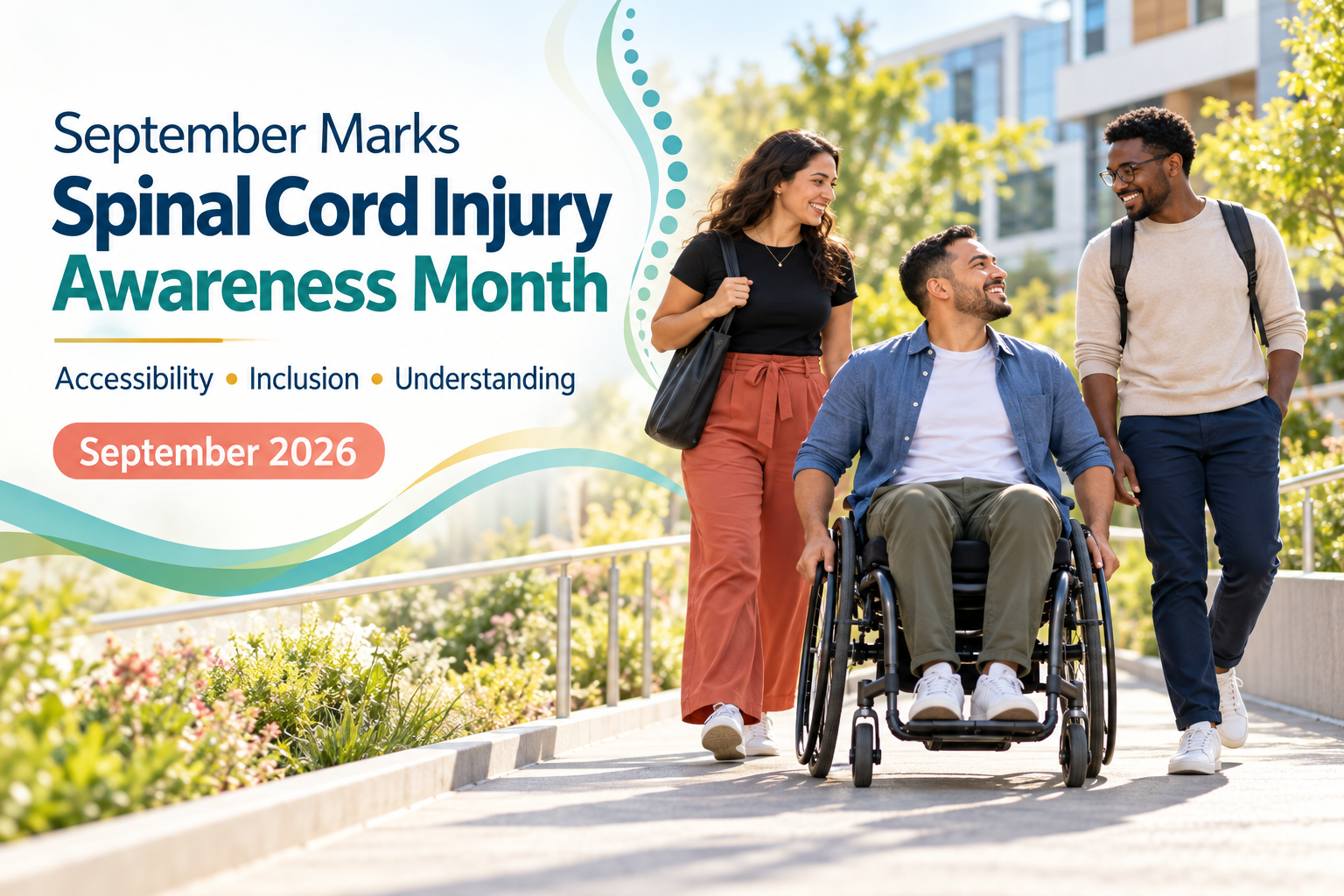
September is recognized as Spinal Cord Injury Awareness Month, a time dedicated to increasing public understanding of spinal cord injuries, supporting people living with them and highlighting the continuing need for accessible health care, rehabilitation, research and community inclusion. The observance has been recognized by the U.S. Senate in multiple years. In 2025, the Senate again designated September as National Spinal Cord Injury Awareness Month, citing the need for continued research, improved treatments and greater awareness of the challenges faced by people living with spinal cord injuries. United Spinal Association also recognizes September as Spinal Cord Injury Awareness Month in its 2026 disability observances. Spinal cord injuries, commonly called SCIs, occur when damage to the spinal cord interferes with communication between the brain and the body. Injuries can result from trauma, such as vehicle crashes or falls, but spinal cord damage can also be caused by disease, tumors, infection, loss of oxygen and other medical conditions. The effects can vary dramatically depending on the location and severity of the injury. An injury affecting the lower portion of the body is generally described as paraplegia, while an injury affecting the arms as well as the lower body is called tetraplegia, formerly commonly called quadriplegia. An injury may also be classified as complete or incomplete depending on how much motor or sensory function remains below the level of injury. More than 18,000 new traumatic spinal cord injuries occur in the United States each year, according to the National Spinal Cord Injury Statistical Center at the University of Alabama at Birmingham. That estimate does not include people who die at the location where the injury occurs. An estimated 257,000 to 388,000 people were living with traumatic spinal cord injuries in the United States in 2023, according to the center. Motor vehicle crashes account for about 38% of traumatic spinal cord injuries recorded since 2015, followed by falls at approximately 32%. Acts of violence account for about 15%, while sports-related injuries represent approximately 8%. Although spinal cord injury is often associated with younger people injured in crashes or sports accidents, it affects people across the lifespan. The average age at the time of injury has risen substantially, from about 29 years in the 1970s to approximately 43 years among people injured since 2015. Loss of the ability to walk is one of the most visible effects of some spinal cord injuries, but SCI can affect nearly every body system. Depending on the location and severity of the injury, people may experience changes in sensation, muscle control, bladder and bowel function, sexual function, circulation, breathing, temperature regulation and blood pressure. Secondary medical conditions can include urinary tract infections, pressure injuries, chronic pain, blood clots, respiratory complications and osteoporosis. Autonomic dysreflexia, a potentially dangerous sudden rise in blood pressure, can occur particularly in people with injuries at or above the T6 level. For many people, rehabilitation becomes an important part of adjusting to life following an injury. Physical therapy, occupational therapy, assistive technology and mobility equipment can help people regain or maximize independence. Recovery also varies widely. Some people regain significant movement or sensation after an incomplete spinal cord injury, while others experience permanent paralysis. Improvements may continue long after an initial hospitalization or rehabilitation stay, and the course of recovery is different for every individual. Spinal Cord Injury Awareness Month also brings attention to challenges that extend beyond medical care. Accessible housing, transportation, workplaces, public buildings and recreational spaces can significantly affect whether people with disabilities can participate independently in their communities. Wheelchairs and other mobility devices are tools of independence, but physical barriers such as stairs, narrow doorways, inaccessible bathrooms and inadequate transportation can restrict opportunities that would otherwise be available. Employment is another important issue. Advances in technology and remote work have expanded opportunities for some people with mobility disabilities, but inaccessible workplaces, transportation problems and misconceptions about disability can remain obstacles. Awareness means recognizing that disability does not automatically mean dependence. People with spinal cord injuries work, raise families, travel, participate in sports, volunteer, pursue education and remain active in their communities. Scientists continue to investigate ways to limit damage immediately following a spinal cord injury and improve function afterward. Research includes nerve regeneration, neuroprotection, electrical stimulation, rehabilitation technologies, brain-computer interfaces and other approaches aimed at restoring movement or improving independence. Federal lawmakers, disability organizations and research institutions have repeatedly emphasized the importance of funding clinical research and developing new treatments for spinal cord injury. The 2025 Senate resolution recognizing SCI Awareness Month specifically called for continued research and clinical trials for promising therapies. Even when a cure is not available, advances in rehabilitation, assistive technology and medical management can improve health, function and quality of life. Spinal Cord Injury Awareness Month is ultimately about more than statistics. It provides an opportunity to learn about an injury that can occur suddenly and permanently change the way a person interacts with the world. It also highlights the importance of prevention, emergency treatment, rehabilitation, accessible communities and continued medical research. Just as important is understanding that a spinal cord injury is only one part of a person's life. A wheelchair, walker or other mobility device may make a disability visible, but it does not define a person's abilities, ambitions or value. September offers an opportunity to replace assumptions with knowledge — and awareness with greater accessibility, inclusion and understanding. References National Spinal Cord Injury Statistical Center, University of Alabama at Birmingham. “Frequently Asked Questions.” Includes current U.S. estimates for spinal cord injury incidence, prevalence, causes, demographics and complications. United Spinal Association. “United Spinal Related Observances.” Lists September as Spinal Cord Injury Awareness Month for 2026. Christopher & Dana Reeve Foundation. “Spinal Cord Injury.” Information on causes, types and effects of spinal cord injury. Christopher & Dana Reeve Foundation. “Secondary Conditions.” Information about medical complications associated with paralysis and spinal cord injury. U.S. Senate. Senate Resolution 440, 119th Congress, designating September 2025 as National Spinal Cord Injury Awareness Month and supporting research, clinical trials and improved quality of life for people living with spinal cord injuries.
September 27, 2026
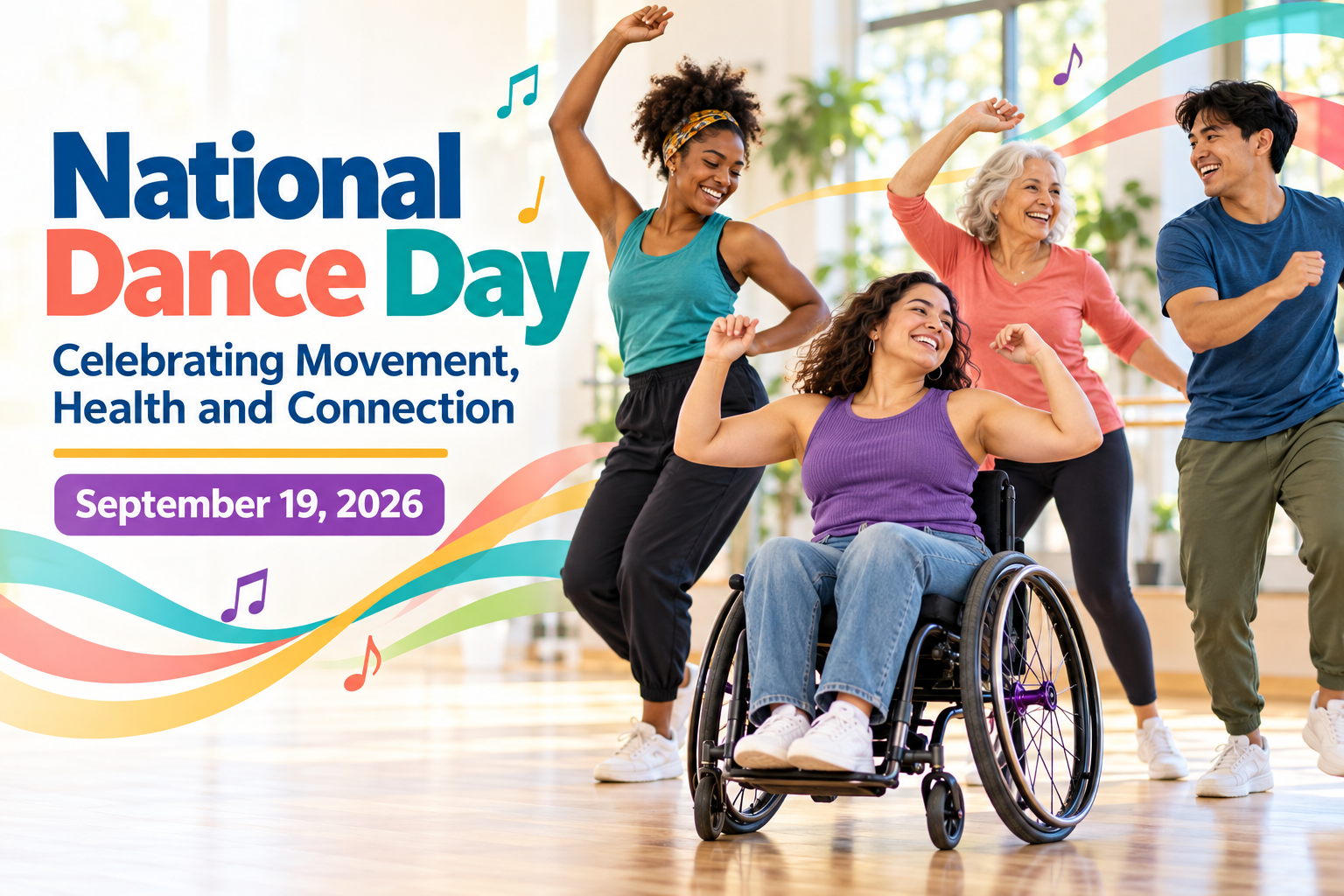
Dance is more than entertainment. It is movement, expression, exercise and, for many people, a powerful way to connect with others. Each year, National Dance Day celebrates the many ways dance can bring people together while encouraging people of all ages and abilities to get moving. National Dance Day is observed in September and was created to promote dance as a fun and accessible form of physical activity. The celebration is supported by American Dance Movement, an organization dedicated to increasing access to dance and highlighting its physical, emotional and social benefits. Dance has existed across cultures and generations as a form of storytelling, celebration and self-expression. It can also provide significant health benefits. Regular dancing can improve cardiovascular fitness, strength, balance, coordination and flexibility. Because it combines movement with music and memory, dance can also challenge the brain while encouraging creativity. Dance does not have to mean formal lessons or complicated choreography. Moving to music at home, participating in a community class or simply swaying and tapping along to a favorite song can all be forms of dance. For people who may have limited mobility, dance can also be adapted. Seated dance, upper-body movement and other modified forms of dance allow people with disabilities or physical limitations to participate in ways that work for them. One of the goals of National Dance Day is to make dance available to everyone. Community organizations, schools, dance studios and fitness programs often use the observance as an opportunity to introduce people to different styles of dance and encourage participation regardless of experience level. Dance can cross age, cultural and language barriers. From ballet and ballroom dancing to hip-hop, jazz, folk dancing and line dancing, every style offers its own form of expression and movement. National Dance Day also emphasizes that people do not have to consider themselves “dancers” to participate. The goal is simply to move. National Dance Day can be celebrated in many ways. People can turn on a favorite song and dance at home, attend a community dance event, try a new dance class or learn simple choreography with friends or family. American Dance Movement has also promoted National Dance Day routines and video challenges designed to encourage people across the country to participate together. Schools and community organizations can use the day to introduce children and adults to different styles of dance or discuss the role dance has played in cultures throughout history. Even a few minutes of movement can be a meaningful way to participate. Perhaps one of the most important messages behind National Dance Day is that movement looks different for everyone. Dance does not require a particular body type, age or level of physical ability. A person can dance standing, seated, with assistance or through whatever movement is available to them. At its heart, dance is about expression. National Dance Day offers a reminder that movement can be joyful rather than simply something we do for exercise. Whether it happens on a stage, in a studio, in a wheelchair, in the kitchen or alone in the living room, dance gives people an opportunity to connect music, movement and emotion. On National Dance Day, the invitation is simple: Turn on the music, move in whatever way you can and celebrate what your body is able to do. References American Dance Movement. “National Dance Day.” American Dance Movement. The organization promotes National Dance Day and encourages participation through dance events, choreography and community programs. American Dance Movement. “American Dance Movement Announces New September Date for National Dance Day.” June 4, 2019. National Dance Day was moved from July to the third Saturday in September to expand participation, including through schools. U.S. House of Representatives. H. Res. 1350, 117th Congress. The resolution supports National Dance Day and recognizes dance for its contributions to physical fitness, dance education and artistic expression. Congressional Record. “Celebrating National Dance Day.” July 30, 2010. The congressional remarks describe National Dance Day as a celebration of dance as an art form and a way to promote physical activity and health.
September 21, 2026
National Concussion Awareness Day ® Our mission is to start a conversation to increase concussion awareness nationally, raise funds for brain injury charitable organizations and show support for those suffering though social media, community events and press coverage of National Concussion Awareness Day. Our vision is that those suffering the effects of mild traumatic brain injuries feel supported by their community and feel empowered to share their story, connect with one another and act to raise global consciousness of the concussion epidemic. National Concussion Awareness Day ® was founded in 2016 by Brooke Mills, who suffered a concussion as a freshman in high school. Concussions have become an epidemic in the United States, with millions of mild traumatic brain injuries happening each year. The purpose of National Concussion Awareness Day ® is to create an opportunity for public discussion of this issue. By raising awareness of the importance of recognizing a concussion, treating it appropriately and supporting the injured we can positively impact lives across the country. National Concussion Awareness Day ® is a chance for health care practitioners, teachers, coaches and parents to connect and discuss baseline testing, signs and symptoms and the social and emotional issues that can result from mild traumatic brain injury. Health care professionals, non-profit organizations and support groups from across the United States will be participating in the tenth annual National Concussion Awareness Day ® on Friday, September 18, 2026. National Concussion Awareness Day has been recognized by the Unites States Congress. National Concussion Awareness Day will be recognized on the third Friday of each September yearly and is registered with the United States Patent and Trademark Office. In 2019 a bipartisan resolution was introduced in the United States Senate by Senators Maggie Hassan (D-NH) and Shelley Moore Capito (R-WV) recognizing September 20, 2019 as National Concussion Awareness Day. The resolution was introduced in the House of Representatives by Congressman Bill Pascrell (D-NJ-9) and Don Bacon (R-NE-2). ​In 2023, a resolution was passed in the US Senate recognizing National Concussion Awareness Day by Senators Maggie Hassan (D-NH), Shelley Morre Capito (R-WV), and Bob Casey (D-PA). In 2025 Senator Hassan (D-NH) again worked to pass the Concussion Awareness Day Resolution successfully in the US Senate. We invite you to participate in National Concussion Awareness Day ® in one of three easy ways in 2026: 1. Share your story! Spread concussion awareness by sharing your story with your local newspaper, TV or radio station (see our sample below to create your own easy press release). Or you can simply share your story on your own social media. Remember to use the hashtag #nationalconcussionawarenessday 2. Create an educational opportunity. You can host an information table at your school, library or public place. Or invite a local concussion expert as a speaker to your school, work or community group. The BIAA is providing downloadable information sheets free of charge - use them for your information table or as an event handout (see below). 3. Host your own fundraiser to benefit the brain injury charity of your choice. You can have a bake sale, host a restaurant fundraiser, start a social media donation page or even host a car wash. Be creative and have fun with your fundraiser. Send your fundraiser proceeds, indicating “National Concussion Awareness Day” on your check, to your favorite local, state or national injury charity or consider supporting BIAA: Brain Injury Association of America PO Box 7416 Merrifield, VA 22116-7416 4. Educate yourself at www.CDC.gov or take the BIAA and TeachAids "Crash Course" for free at www.biausa.org/crashcourse 5. Take the #melonpledge with Concussion Awareness Now For additional ways to create concussion awareness in your community go to www.LessenTheImpact.org
More Posts

New Paragraph