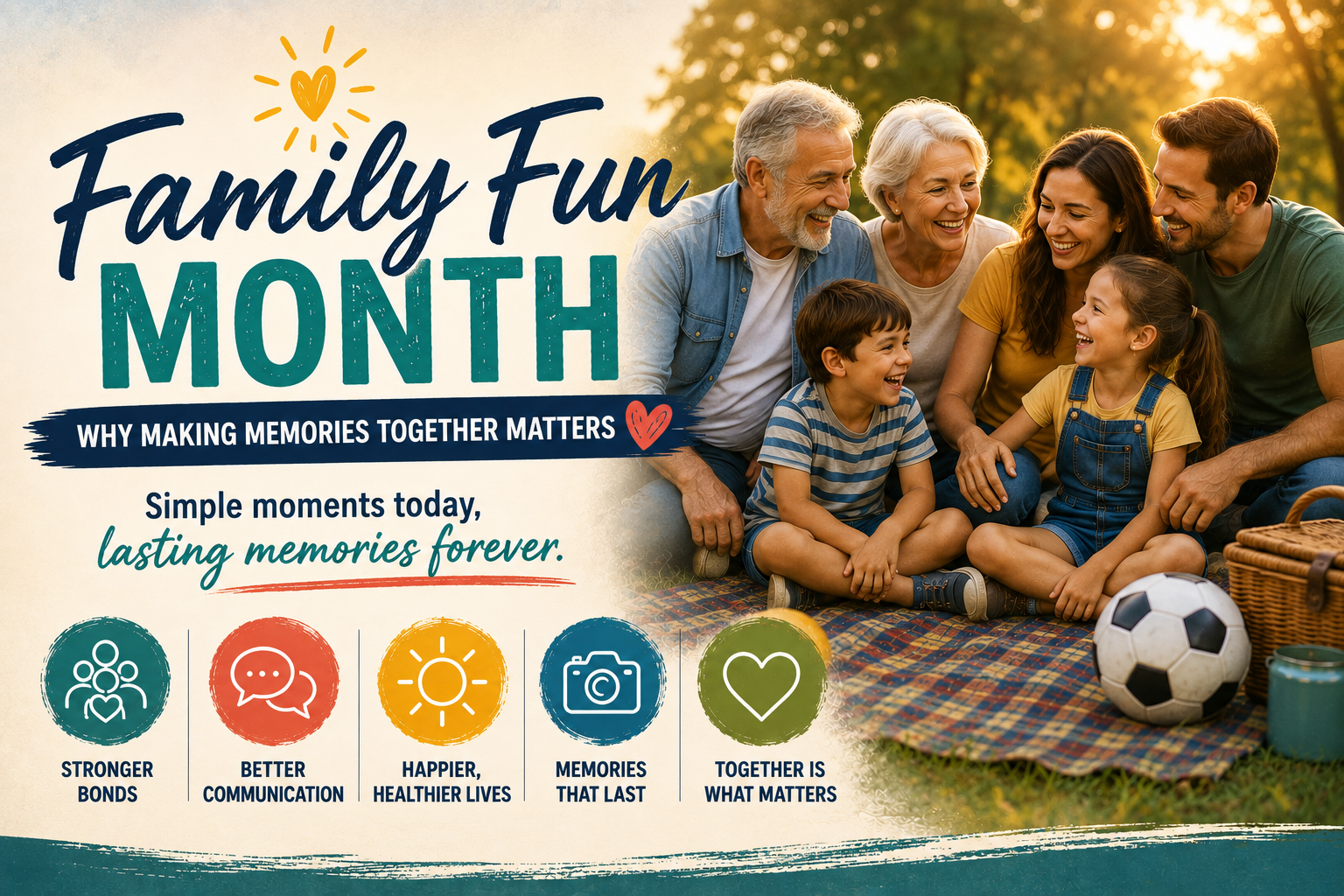
Family Fun Month: Why Making Memories Together Matters
August 10, 2026


Every August, families across the United States celebrate Family Fun Month, a

reminder to slow down, unplug from daily distractions, and spend meaningful time with

the people who matter most. While family vacations and special outings are wonderful,

creating lasting memories doesn't have to be expensive or elaborate. Often, the

moments children and adults remember most are the simple ones spent laughing,

talking, and enjoying each other's company.


In today's fast-paced world, work schedules, school activities, sports, and technology

often compete for our attention. Family Fun Month serves as an opportunity to

intentionally reconnect before the busy routines of fall. Research consistently shows

that strong family relationships contribute to healthier, happier lives. Families who spend

quality time together often experience better communication, stronger emotional bonds,

increased self-esteem in children, greater resilience during stressful times, improved

mental health, and a stronger sense of belonging and security.


Quality time also creates opportunities for children to develop important life skills.

Everyday conversations during dinner, a walk through the park, or a family game night

help children build confidence, strengthen language skills, learn problem-solving, and

develop empathy. For adults, spending time with loved ones can reduce stress,

improve mood, and provide a sense of connection that supports overall well-being.


It's more about quality, not quantity. One of the biggest misconceptions about family

time is that it requires hours of planning or expensive vacations. In reality, meaningful

moments often happen during ordinary activities such as cooking dinner together,

playing board games, taking an evening walk, reading bedtime stories, working on a

puzzle, gardening, watching the sunset, or having a picnic at a local park. The key isn't

the activity, but rather being fully present. Putting away phones, turning off

notifications, and giving one another undivided attention helps strengthen relationships

and creates memories that last far longer than another hour spent scrolling through

social media.


Unplugging can help us reconnect. Technology has brought countless conveniences,

but it has also created new challenges for family relationships. According to the

American Academy of Pediatrics, creating intentional "screen-free" times allows families

to communicate more effectively and encourages stronger social and emotional

development in children. Consider establishing simple traditions such as device-free

dinners, family game nights, weekend outdoor adventures, evening neighborhood

walks, or monthly family movie nights. These routines provide something everyone can

look forward to while reinforcing healthy habits.


Celebrating Family Fun Month doesn't require a large budget. Some of the best

activities cost little or nothing at all. Try one of these ideas: visit a local park or nature

trail, build a backyard obstacle course, fly kites on a windy afternoon, have a family

talent show, create homemade pizzas together, host a scavenger hunt, camp in the

backyard, visit your local library, explore a nearby museum on a free admission day,

volunteer together in your community, start a family scrapbook, make homemade ice

cream, watch the stars and learn about constellations, have a water balloon fight or

sprinkler day, or take turns choosing everyone's favorite board game. The goal isn't

about perfection; it's about participation.


Family traditions create a sense of identity and belonging. Whether it's Sunday pancake

breakfasts, annual camping trips, holiday baking, or Friday movie nights, traditions

become the stories families tell for years to come. Children especially benefit from

predictable traditions because they provide comfort, stability, and opportunities to create

positive memories that often continue into adulthood. Even simple traditions like taking

a family photo on the first day of school or making homemade birthday breakfasts can

become cherished rituals.


Every family looks different, and Family Fun Month is for everyone. Families may

include parents, grandparents, siblings, foster families, adoptive families, close friends,

or chosen family members. What matters most isn't who lives under the same roof; it's

the love, support, and connections that people build together. Family fun can also be

adapted for every age and ability. Whether it's a stroller walk with a toddler, an

accessible nature trail for a family member using a wheelchair, a card game with

grandparents, or a virtual game night with relatives across the country, there are

countless ways to enjoy time together.


Years from now, most people won't remember every toy they received, or every

television show they watched. They'll remember the camping trip where it rained all

weekend, the cookies everyone burned together, the family road trip filled with singing,

or the evening spent laughing around the dinner table. These shared experiences help

shape who we are and remind us that life's greatest moments are often the simplest.


Family Fun Month is more than another observance on the calendar; it's a reminder that

strong relationships are built one moment at a time. Whether it's a weekend adventure

or fifteen uninterrupted minutes before bedtime, spending quality time together

strengthens relationships, improves emotional well-being, and creates memories that

last a lifetime. This August, challenge your family to put away the devices, embrace the

simple moments, and make time for what matters most—each other.


References


American Academy of Pediatrics (2025), Family Media Plan. American Psychological

Association (2023), Building strong family relationships and resilience. National Day

Calendar (2026), Family Fun Month. National Institutes of Health (2018) The Power of

Social Connection. Awareness Days. (2026), Family Fun Month
August 9, 2026
The body content of your post goes here. To edit this text, click on it and delete this default text and start typing your own or paste your own from a different source.
July 7, 2026
Feel like your child needs a little more structure this summer? Try Dianne’s simple 3-step approach to prevent the “summer slide” and keep learning moving forward—without the overwhelm. 
July 7, 2026
Believe it or not, breaks from formal schooling actually support learning! Time away gives the brain a chance to process and store information—moving it from short-term memory into long-term retention. In many ways, rest is productive ! Having a dedicated break period also supports mental health by allowing space for emotional regulation and helping reduce stress and anxiety. When students return from a true break, they’re often more refreshed, focused, and ready to learn.
June 17, 2026
Post-Traumatic Stress Disorder (PTSD) is a mental health condition that can develop after experiencing or witnessing a traumatic event. While PTSD is often associated with military combat veterans, it can affect anyone who has experienced trauma, including survivors of accidents, natural disasters, violence, abuse, serious illness, or the sudden loss of a loved one. It is normal to experience fear, anxiety, or emotional distress following a traumatic event. For many people, these feelings gradually improve over time. However, when symptoms persist for more than a month and begin interfering with daily life, relationships, work, or overall well-being, PTSD may be present. Common symptoms of PTSD include intrusive memories, flashbacks, or nightmares related to traumatic events, avoidance of people, places, or situations that trigger memories of the trauma, negative changes in mood, thoughts, or increased anxiety, irritability, hypervigilance, or difficulty sleeping. PTSD affects each person differently. Some individuals experience symptoms immediately after a traumatic event, while others may not develop symptoms until months or even years later. The condition can impact physical health as well, contributing to fatigue, headaches, chronic stress, and other health concerns. One of the most important things to understand about PTSD is that it is not a sign of weakness. PTSD is a recognized medical condition that can affect people of all ages, backgrounds, and professions. Seeking help is a sign of strength, not failure. The good news is that effective treatments are available. Mental health professionals often use evidence-based therapies such as Cognitive Processing Therapy (CPT), Prolonged Exposure Therapy (PE), and Eye Movement Desensitization and Reprocessing (EMDR) to help individuals process trauma and reduce symptoms. Support groups, healthy lifestyle habits, exercise, stress-management techniques, and strong social connections can also play an important role in recovery. Raising awareness about PTSD helps reduce stigma and encourages those who are struggling to seek support. By understanding the signs and symptoms, we can create more compassionate communities where people feel safe asking for help. Recovery is possible. With proper treatment, support, and understanding, many individuals living with PTSD go on to lead healthy, productive, and fulfilling lives. Brain Builder Pros and Redline Exercise Rx have been providing treatment for TBI's and neurological injuries for twenty-five years. Please get in touch with us if you have any questions or if we can be of assistance to you in any way. References National Institute of Mental Health (2025) Post-Traumatic Stress Disorder (PTSD). U.S. Department of Veterans Affairs, National Center for PTSD (2025). PTSD Basics. American Psychiatric Association (2025). What Is PTSD? Substance Abuse and Mental Health Services Administration (SAMHSA) (2025). PTSD and Trauma. U.S. Department of Veterans Affairs, National Center for PTSD (2025) Overview of Psychotherapy for PTSD.
June 17, 2026
 June is National Safety Month, a time dedicated to raising awareness about preventing injuries at work, at home, and during recreational activities. While safety should be a year-round priority, this month serves as an important reminder that many injuries are preventable with the right precautions. For athletes and active individuals, one of the most effective ways to reduce the risk of serious injury is by using proper protective equipment. Whether you're riding a bicycle, skateboarding, participating in contact sports, or enjoying outdoor recreation, wearing a properly fitted helmet can significantly reduce the risk of head injuries. Safety experts consistently emphasize that helmets are one of the most effective pieces of protective equipment available for preventing serious brain injuries during sports and recreational activities. Falls are another leading cause of injuries across all age groups. Many falls occur during sports, exercise, or recreational activities and can result in sprains, fractures, concussions, and other serious injuries. Maintaining awareness of your surroundings, using proper equipment, keeping play areas free of hazards, and following safety guidelines can greatly reduce these risks. Falls remain one of the most common causes of preventable injuries, making fall prevention an important focus of National Safety Month. Parents, coaches, and athletes can further improve safety by ensuring equipment fits properly, staying hydrated, warming up before activity, and encouraging players to speak up about pain or injuries rather than trying to "play through" them. Creating A culture of safety helps keep athletes healthy, active, and participating in the activities they enjoy. Safety is an essential part of every activity. By combining proper training, appropriate protective gear, and awareness of potential hazards, participants can reduce their risk of injury while maximizing fun and performance. This National Safety Month, take a moment to evaluate your own safety habits. A helmet, proper equipment, and a little extra awareness can make all the difference. Brain Builder Pros and Redline Exercise Rx have been providing treatment for TBI's and neurological injuries for twenty-five years. Please get in touch with us if you have any questions or if we can be of assistance to you in any way. References DEFY Neuro Rehab; National Safety Council (2026) National Safety Month; Centers for Disease Control and Prevention (CDC) (2025). Safety Guidelines: Helmets (HEADS UP Program) Centers for Disease Control and Prevention (CDC) (2025). Preventing Traumatic Brain Injury (TBI). Centers for Disease Control and Prevention (CDC). (2025). Pedestrian, Bicycle, and Motorcycle Safety: Bicycle Safety. Centers for Disease Control and Prevention (CDC) (2025). Youth Sports Concussion Training. American College of Surgeons (2023); Bicycle Safety and the Promotion of Bicycle Helmet Use.
June 17, 2026
Traumatic Brain Injury (TBI) is a significant public health concern and a leading cause of death and disability worldwide. A TBI occurs when an external force disrupts normal brain function, often resulting from a blow, jolt, or penetrating injury to the head. The severity of a TBI can range from mild concussions to severe injuries that cause permanent neurological impairment. TBIs affect individuals of all ages and can have profound physical, cognitive, emotional, and social consequences. The Centers for Disease Control and Prevention (CDC) defines a traumatic brain injury as an injury that affects how the brain works. TBIs can occur from falls, motor vehicle accidents, sports injuries, assaults, military combat exposure, or any event that causes the brain to move violently within the skull. TBIs are commonly categorized into three levels: A mild TBI may involve a brief alteration of consciousness, confusion, dizziness, headache, memory problems, or balance disturbances. Although many individuals recover completely, some experience persistent symptoms known as post-concussion syndrome. Moderate injuries involve longer periods of unconsciousness and more significant neurological symptoms. Recovery often requires extensive rehabilitation and ongoing medical management. Severe TBIs can result in prolonged unconsciousness, coma, permanent disability, or death. These injuries often require intensive medical intervention and long-term support. TBI remains a major cause of morbidity and mortality in the United States. According to the CDC, more than 69,000 TBI-related deaths occurred in 2021, averaging approximately 190 deaths per day. Falls are the leading cause of TBI-related hospitalizations, particularly among older adults, while motor vehicle crashes, assaults, and firearm-related injuries are also significant contributors. Certain populations are at increased risk: older adults, young children, athletes participating in contact sports, military personnel and veterans, individuals with previous TBIs and people taking anticoagulant medications (blood thinners). Clinical symptoms may vary depending on injury severity and the area of the brain affected. Physical symptoms can include headache, dizziness, balance impairments, nausea and vomiting, visual disturbances, sensitivity to light, noise, and fatigue. Cognitive symptoms may include memory deficits, reduced concentration, slowed information processing, impaired judgment, and executive function difficulties. Emotional and behavioral symptoms can include anxiety, depression, irritability, emotional instability, personality changes, and social withdrawal. Brain injury occurs through both primary and secondary mechanisms. Primary injury occurs at the moment of impact and includes skull fractures, brain contusions, diffuse axonal injury, and intracranial hemorrhage. Secondary injury develops hours to days after the initial trauma and may involve cerebral edema, inflammation, reduced cerebral blood flow, increased intracranial pressure, and metabolic dysfunction. These secondary processes often contribute significantly to long-term neurological deficits. Neuroplasticity and recovery after TBI are largely dependent on the brains ability to reorganize and form new neural connections. Neuroplasticity allows surviving brain regions to compensate for damaged areas through structural and functional adaptation. Research demonstrates that targeted rehabilitation can enhance neuroplastic changes and improve outcomes. Factors influencing recovery include age, injury severity, pre- existing health conditions, access to rehabilitation, family and social support and psychological well-being. Rehabilitation following a TBI is a critical component of recovery and often requires an interdisciplinary approach. Physical Therapists address mobility impairments, balance deficits, strength limitations and endurance challenges. Occupational therapy focuses on activities of daily living, self-care skills, community participation and adaptive equipment training. Speech-language pathologists help individuals improve communication skills, cognitive-linguistic abilities, and swallowing function. Neuropsychologists address memory impairments, attention deficits, executive dysfunction and emotional adjustment. Comprehensive rehabilitation programs have been shown to improve functional independence and quality of life. The Long-Term Consequences of a TBI are increasingly recognized as a chronic health condition rather than a single event. Individuals may experience long-term complications such as chronic headaches, fatigue, cognitive decline, sleep disturbances, depression and anxiety, increased risk of seizures, reduced employment opportunities, and social isolation. Research indicates that many individuals with moderate-to-severe TBI continue to experience disability years after injury. Some require assistance with daily activities, while others may need lifelong support services. Emerging directions in TBI rehabilitation science are expanding treatment possibilities. Emerging approaches include virtual reality-based therapy, robotics-assisted rehabilitation, brain-computer interfaces, tele-rehabilitation, and advanced neuroimaging-guided interventions. These innovations aim to improve accessibility and optimize recovery outcomes through individualized treatment strategies. In Conclusion, traumatic brain injury is a complex neurological condition with far- reaching physical, cognitive, emotional, and social consequences. Although recovery varies considerably among individuals, advances in acute medical care, rehabilitation science, and neuroplasticity research have improved outcomes for many survivors. Early diagnosis, comprehensive rehabilitation, and long-term support remain essential for maximizing functional recovery and quality of life following TBI. Brain Builder Pros and Redline Exercise Rx have been providing treatment for TBI's and neurological injuries for twenty-five years. Please contact us if you have any questions or if we can be of assistance to you in any way. References Centers for Disease Control and Prevention. Traumatic Brain Injury & Concussion, 2025. Facts About TBI, 2025.National Institute of Neurological Disorders and Stroke; Traumatic Brain Injury (TBI). Centers for Disease Control and Prevention; Symptoms of Mild TBI and Concussion, 2025. Matney C, et al. The Scope and Burden of Traumatic Brain Injury; National Academies Press, 2022. Matney C, et al. Rehabilitation and Long-Term Care Needs After Traumatic Brain Injury; National Academies Press, 2022. Su YRS, et al. Neuroplasticity After Traumatic Brain Injury; National Center for Biotechnology Information, 2016. Johns Hopkins Medicine.; Rehabilitation After Traumatic Brain Injury. CDC. Recovery from a Moderate or Severe TBI, 2025. Shen Y, et al. A Comprehensive Review of Rehabilitation Approaches for Traumatic Brain Injury; 2025.
June 3, 2026
Understanding Language Loss After Brain Injury
May 14, 2026
A Supportive Approach to Rehabilitation
By CFSI May 17, 2024
OSU's Center for Social Innovation Grads!
More Posts

New Paragraph