Struggling Learner Certification and Brain Builder Pros, A Great Team.

Pamela Redline • September 21, 2021

"After two years of study, Pam has received her certificate from The Dianne Craft Right Brain Learning Program".
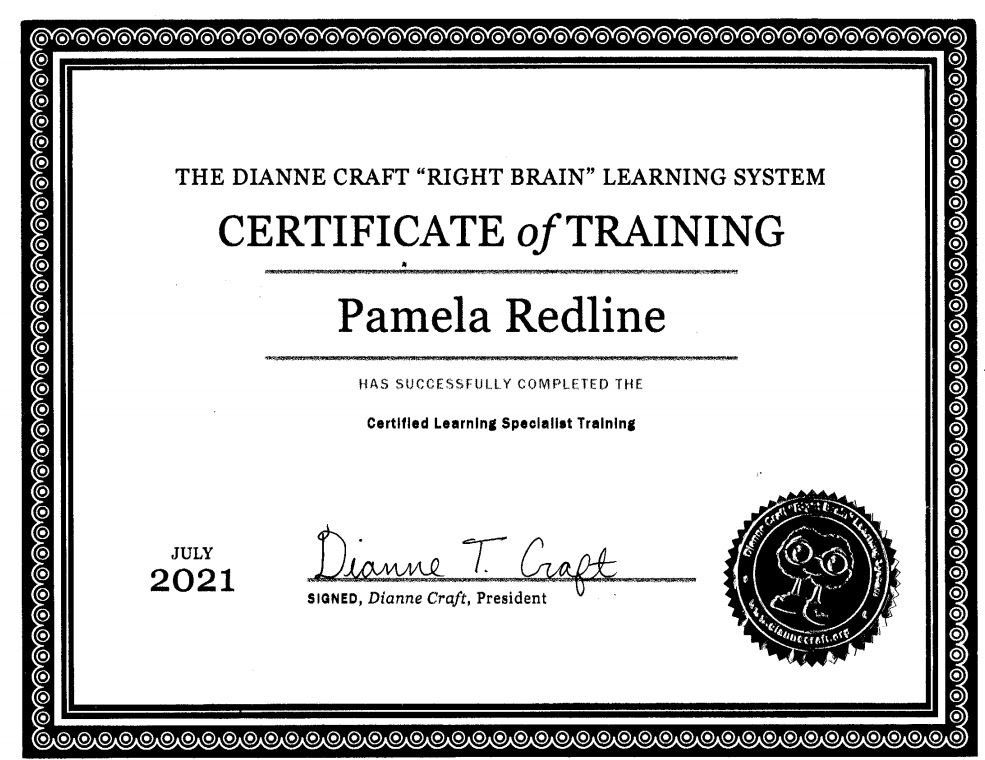
What does that mean to you?


She has completed course work in the study of brain integration therapy and brain training. The course was designed by Dianne Craft, Founder and President of the Dianne Craft "Right Brain" Learning System


"Dianne has over 35 years of experience teaching bright, inquisitive children who are struggling with learning because of a "glitch" in the processing of information (sometimes referred to as a learning disability). She teaches to the problems of these children, often including hyperactivity or attention/behavior problems with a unique way: to find the "solutions" to the problem(s), rather than to compensate for the problem.


She received her Bachelor's Degree in Elementary and Special Education from St. Cloud State University in Minnesota in 1966 and a Master's Degree in Special Education from the University of Northern Colorado in 1990.


Her long-time passion is discovering the reason why children struggle with learning and behavior. She began her quest for the latest brain research concerning learning disabilities and their causes, with the belief that God has many solutions available that were previously little or unknown to both parents and teachers alike. She has traveled extensively to glean these bits of knowledge and began applying new techniques to struggling learners.


Dianne Craft Right Brain Learning System was created and Dianne began teaching the workshop "Brain Integration Therapy" in 1988. She has taught it to children, educators, psychologists, speech therapists, and occupational therapists. In 1993 she began teaching these life-changing concepts directly to parents so that they could also work with their children.


During the process of studying the brain and children's learning, she created two more popular workshops: "Teaching Strategies for the Right Brain Child" and "The Biology of Learning (Behavior)." She has also taught these classes throughout the five-state region around Colorado.


She retired from teaching in 1997 after 25 years of working with bright and struggling learners but wanted to continue working with kids, so she started a private consulting firm, Child Diagnostics, Inc. https://diannecraft.org, in 1997. Her inspiration was the unique, and proven method that she has developed to diagnose the cause of learning problems and it would be well served by teaching it to the parents of struggling, bright learners. The program not only consists of exercises to perform with children but also nutritional interventions.


She became a nutritionist after realizing that there was another important puzzle piece to these struggling learners. In 1999 she became a Certified Nutritional Health Professional (CNHP) by Trinity College of Warsaw, Indiana. If a child's biochemistry is upset and his nervous system is not responding correctly, it can make it look like he has focusing problems, auditory processing problems, and even dyslexia.


She lives Centennial, Colorado and continues to run the Dianne Craft "Right Brain" Learning System with my granddaughter, Cassie Moore. They are a great team and they have so much fun working together and creating more products and services to help our students, parents and teachers feel successful." https://diannecraft.org/ I came into this program because of a loved one who suffered a brain injury. It's a long and rather interesting story as to how I found Dianne and her wonderful program. As a Medical Exercise Specialist, I specialize in post rehabilitation/post injury programs. There are far too many people who need continuing care after discharge from therapies but their insurance benefits has run out. Our team of professionals are then brought on board to provide the wellness continuum to address this need.


Physiological healing is very important but the neurological component cannot be overlooked. The entire brain and body must be addressed for total healing to take place. After implementing the Dianne Craft programs to my loved one and seeing the immediate and profound healing response, I was amazed. Dianne and I communicated often about the success of the person I was caring for. She told me I would be a great addition to the "Craft Healing Team" so I began my educational journey. It has been 100% successful with the clients I have worked with.


I have been able to successfully apply the Right Brain Learning System to clients who have been diagnosed with autism, Asperger's, traumatic brain injury, and brain tumor recovery. In addition, this program has changed the lives of my cients with strokes, PICS, and poly pharmacy. I have learned A LOT! This program is simple and very effective. Like any healing program, it takes effort on both sides - the client and the practitioner. But it will change your life. I also apply the techniques to each of my clients as part of their medical exercise and personal training programs. Blending together the neurological with the physiological has made me a much more capable practitioner but the greatest benefit is seen in the immediate results my clients have experienced in their lives.

I invite you to contact me for more information about life-changing, healing modalities to help you or your struggling learner.


Pam Redline, MES, OES, SLC, CPT, GFI

July 7, 2026
Feel like your child needs a little more structure this summer? Try Dianne’s simple 3-step approach to prevent the “summer slide” and keep learning moving forward—without the overwhelm. 
July 7, 2026
Believe it or not, breaks from formal schooling actually support learning! Time away gives the brain a chance to process and store information—moving it from short-term memory into long-term retention. In many ways, rest is productive ! Having a dedicated break period also supports mental health by allowing space for emotional regulation and helping reduce stress and anxiety. When students return from a true break, they’re often more refreshed, focused, and ready to learn.
June 17, 2026
Post-Traumatic Stress Disorder (PTSD) is a mental health condition that can develop after experiencing or witnessing a traumatic event. While PTSD is often associated with military combat veterans, it can affect anyone who has experienced trauma, including survivors of accidents, natural disasters, violence, abuse, serious illness, or the sudden loss of a loved one. It is normal to experience fear, anxiety, or emotional distress following a traumatic event. For many people, these feelings gradually improve over time. However, when symptoms persist for more than a month and begin interfering with daily life, relationships, work, or overall well-being, PTSD may be present. Common symptoms of PTSD include intrusive memories, flashbacks, or nightmares related to traumatic events, avoidance of people, places, or situations that trigger memories of the trauma, negative changes in mood, thoughts, or increased anxiety, irritability, hypervigilance, or difficulty sleeping. PTSD affects each person differently. Some individuals experience symptoms immediately after a traumatic event, while others may not develop symptoms until months or even years later. The condition can impact physical health as well, contributing to fatigue, headaches, chronic stress, and other health concerns. One of the most important things to understand about PTSD is that it is not a sign of weakness. PTSD is a recognized medical condition that can affect people of all ages, backgrounds, and professions. Seeking help is a sign of strength, not failure. The good news is that effective treatments are available. Mental health professionals often use evidence-based therapies such as Cognitive Processing Therapy (CPT), Prolonged Exposure Therapy (PE), and Eye Movement Desensitization and Reprocessing (EMDR) to help individuals process trauma and reduce symptoms. Support groups, healthy lifestyle habits, exercise, stress-management techniques, and strong social connections can also play an important role in recovery. Raising awareness about PTSD helps reduce stigma and encourages those who are struggling to seek support. By understanding the signs and symptoms, we can create more compassionate communities where people feel safe asking for help. Recovery is possible. With proper treatment, support, and understanding, many individuals living with PTSD go on to lead healthy, productive, and fulfilling lives. Brain Builder Pros and Redline Exercise Rx have been providing treatment for TBI's and neurological injuries for twenty-five years. Please get in touch with us if you have any questions or if we can be of assistance to you in any way. References National Institute of Mental Health (2025) Post-Traumatic Stress Disorder (PTSD). U.S. Department of Veterans Affairs, National Center for PTSD (2025). PTSD Basics. American Psychiatric Association (2025). What Is PTSD? Substance Abuse and Mental Health Services Administration (SAMHSA) (2025). PTSD and Trauma. U.S. Department of Veterans Affairs, National Center for PTSD (2025) Overview of Psychotherapy for PTSD.
June 17, 2026
 June is National Safety Month, a time dedicated to raising awareness about preventing injuries at work, at home, and during recreational activities. While safety should be a year-round priority, this month serves as an important reminder that many injuries are preventable with the right precautions. For athletes and active individuals, one of the most effective ways to reduce the risk of serious injury is by using proper protective equipment. Whether you're riding a bicycle, skateboarding, participating in contact sports, or enjoying outdoor recreation, wearing a properly fitted helmet can significantly reduce the risk of head injuries. Safety experts consistently emphasize that helmets are one of the most effective pieces of protective equipment available for preventing serious brain injuries during sports and recreational activities. Falls are another leading cause of injuries across all age groups. Many falls occur during sports, exercise, or recreational activities and can result in sprains, fractures, concussions, and other serious injuries. Maintaining awareness of your surroundings, using proper equipment, keeping play areas free of hazards, and following safety guidelines can greatly reduce these risks. Falls remain one of the most common causes of preventable injuries, making fall prevention an important focus of National Safety Month. Parents, coaches, and athletes can further improve safety by ensuring equipment fits properly, staying hydrated, warming up before activity, and encouraging players to speak up about pain or injuries rather than trying to "play through" them. Creating A culture of safety helps keep athletes healthy, active, and participating in the activities they enjoy. Safety is an essential part of every activity. By combining proper training, appropriate protective gear, and awareness of potential hazards, participants can reduce their risk of injury while maximizing fun and performance. This National Safety Month, take a moment to evaluate your own safety habits. A helmet, proper equipment, and a little extra awareness can make all the difference. Brain Builder Pros and Redline Exercise Rx have been providing treatment for TBI's and neurological injuries for twenty-five years. Please get in touch with us if you have any questions or if we can be of assistance to you in any way. References DEFY Neuro Rehab; National Safety Council (2026) National Safety Month; Centers for Disease Control and Prevention (CDC) (2025). Safety Guidelines: Helmets (HEADS UP Program) Centers for Disease Control and Prevention (CDC) (2025). Preventing Traumatic Brain Injury (TBI). Centers for Disease Control and Prevention (CDC). (2025). Pedestrian, Bicycle, and Motorcycle Safety: Bicycle Safety. Centers for Disease Control and Prevention (CDC) (2025). Youth Sports Concussion Training. American College of Surgeons (2023); Bicycle Safety and the Promotion of Bicycle Helmet Use.
June 17, 2026
Traumatic Brain Injury (TBI) is a significant public health concern and a leading cause of death and disability worldwide. A TBI occurs when an external force disrupts normal brain function, often resulting from a blow, jolt, or penetrating injury to the head. The severity of a TBI can range from mild concussions to severe injuries that cause permanent neurological impairment. TBIs affect individuals of all ages and can have profound physical, cognitive, emotional, and social consequences. The Centers for Disease Control and Prevention (CDC) defines a traumatic brain injury as an injury that affects how the brain works. TBIs can occur from falls, motor vehicle accidents, sports injuries, assaults, military combat exposure, or any event that causes the brain to move violently within the skull. TBIs are commonly categorized into three levels: A mild TBI may involve a brief alteration of consciousness, confusion, dizziness, headache, memory problems, or balance disturbances. Although many individuals recover completely, some experience persistent symptoms known as post-concussion syndrome. Moderate injuries involve longer periods of unconsciousness and more significant neurological symptoms. Recovery often requires extensive rehabilitation and ongoing medical management. Severe TBIs can result in prolonged unconsciousness, coma, permanent disability, or death. These injuries often require intensive medical intervention and long-term support. TBI remains a major cause of morbidity and mortality in the United States. According to the CDC, more than 69,000 TBI-related deaths occurred in 2021, averaging approximately 190 deaths per day. Falls are the leading cause of TBI-related hospitalizations, particularly among older adults, while motor vehicle crashes, assaults, and firearm-related injuries are also significant contributors. Certain populations are at increased risk: older adults, young children, athletes participating in contact sports, military personnel and veterans, individuals with previous TBIs and people taking anticoagulant medications (blood thinners). Clinical symptoms may vary depending on injury severity and the area of the brain affected. Physical symptoms can include headache, dizziness, balance impairments, nausea and vomiting, visual disturbances, sensitivity to light, noise, and fatigue. Cognitive symptoms may include memory deficits, reduced concentration, slowed information processing, impaired judgment, and executive function difficulties. Emotional and behavioral symptoms can include anxiety, depression, irritability, emotional instability, personality changes, and social withdrawal. Brain injury occurs through both primary and secondary mechanisms. Primary injury occurs at the moment of impact and includes skull fractures, brain contusions, diffuse axonal injury, and intracranial hemorrhage. Secondary injury develops hours to days after the initial trauma and may involve cerebral edema, inflammation, reduced cerebral blood flow, increased intracranial pressure, and metabolic dysfunction. These secondary processes often contribute significantly to long-term neurological deficits. Neuroplasticity and recovery after TBI are largely dependent on the brains ability to reorganize and form new neural connections. Neuroplasticity allows surviving brain regions to compensate for damaged areas through structural and functional adaptation. Research demonstrates that targeted rehabilitation can enhance neuroplastic changes and improve outcomes. Factors influencing recovery include age, injury severity, pre- existing health conditions, access to rehabilitation, family and social support and psychological well-being. Rehabilitation following a TBI is a critical component of recovery and often requires an interdisciplinary approach. Physical Therapists address mobility impairments, balance deficits, strength limitations and endurance challenges. Occupational therapy focuses on activities of daily living, self-care skills, community participation and adaptive equipment training. Speech-language pathologists help individuals improve communication skills, cognitive-linguistic abilities, and swallowing function. Neuropsychologists address memory impairments, attention deficits, executive dysfunction and emotional adjustment. Comprehensive rehabilitation programs have been shown to improve functional independence and quality of life. The Long-Term Consequences of a TBI are increasingly recognized as a chronic health condition rather than a single event. Individuals may experience long-term complications such as chronic headaches, fatigue, cognitive decline, sleep disturbances, depression and anxiety, increased risk of seizures, reduced employment opportunities, and social isolation. Research indicates that many individuals with moderate-to-severe TBI continue to experience disability years after injury. Some require assistance with daily activities, while others may need lifelong support services. Emerging directions in TBI rehabilitation science are expanding treatment possibilities. Emerging approaches include virtual reality-based therapy, robotics-assisted rehabilitation, brain-computer interfaces, tele-rehabilitation, and advanced neuroimaging-guided interventions. These innovations aim to improve accessibility and optimize recovery outcomes through individualized treatment strategies. In Conclusion, traumatic brain injury is a complex neurological condition with far- reaching physical, cognitive, emotional, and social consequences. Although recovery varies considerably among individuals, advances in acute medical care, rehabilitation science, and neuroplasticity research have improved outcomes for many survivors. Early diagnosis, comprehensive rehabilitation, and long-term support remain essential for maximizing functional recovery and quality of life following TBI. Brain Builder Pros and Redline Exercise Rx have been providing treatment for TBI's and neurological injuries for twenty-five years. Please contact us if you have any questions or if we can be of assistance to you in any way. References Centers for Disease Control and Prevention. Traumatic Brain Injury & Concussion, 2025. Facts About TBI, 2025.National Institute of Neurological Disorders and Stroke; Traumatic Brain Injury (TBI). Centers for Disease Control and Prevention; Symptoms of Mild TBI and Concussion, 2025. Matney C, et al. The Scope and Burden of Traumatic Brain Injury; National Academies Press, 2022. Matney C, et al. Rehabilitation and Long-Term Care Needs After Traumatic Brain Injury; National Academies Press, 2022. Su YRS, et al. Neuroplasticity After Traumatic Brain Injury; National Center for Biotechnology Information, 2016. Johns Hopkins Medicine.; Rehabilitation After Traumatic Brain Injury. CDC. Recovery from a Moderate or Severe TBI, 2025. Shen Y, et al. A Comprehensive Review of Rehabilitation Approaches for Traumatic Brain Injury; 2025.
June 3, 2026
Understanding Language Loss After Brain Injury
May 14, 2026
A Supportive Approach to Rehabilitation
By CFSI May 17, 2024
OSU's Center for Social Innovation Grads!
By Dianne Craft April 17, 2024
This is a subtitle for your new post
More Posts

New Paragraph